Plant Finder Tool
Ragin' Red™ Flowering Dogwood
Cornus florida 'JN13'

Height: 25 feet
Spread: 20 feet
Sunlight:


Hardiness Zone: 5a
Brand: Garden Debut
Description:
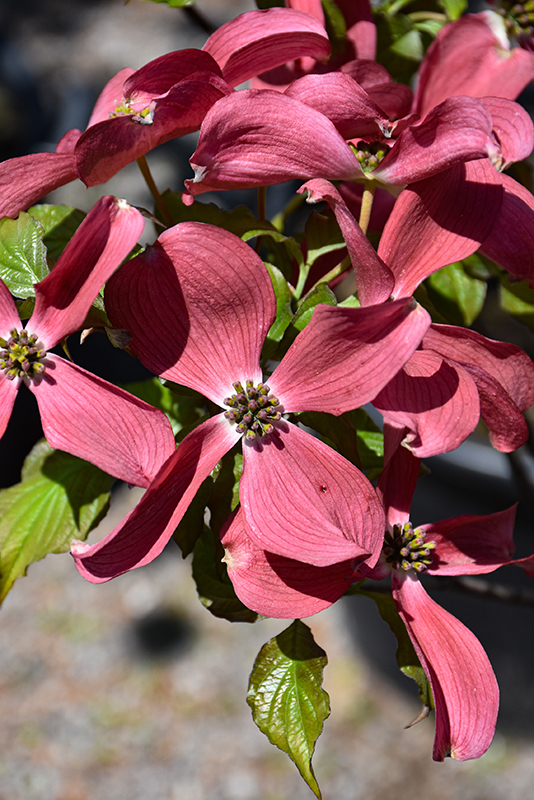
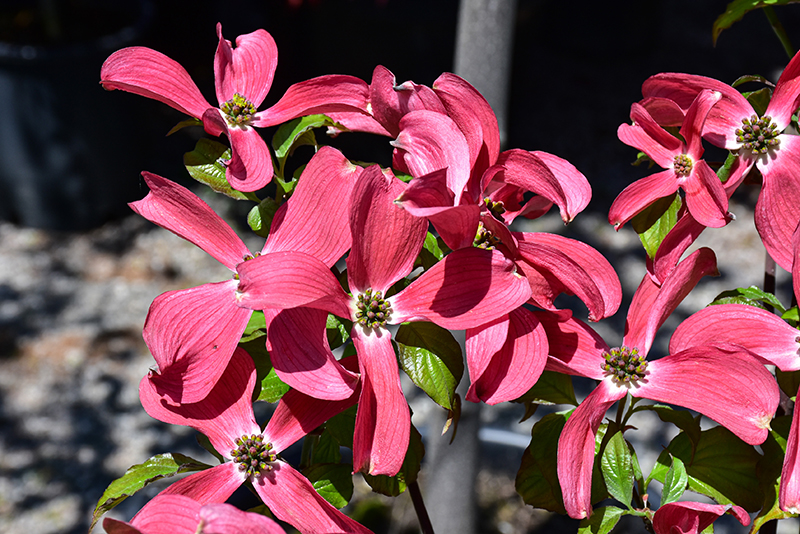
A stunning ornamental tree that is absolutely blanketed with deep red flowers in spring, followed by striking red new growth; has an attractive tiered habit; a picturesque tree that requires rich, well-drained acidic soil and adequate moisture
Ornamental Features
Ragin' Red™ Flowering Dogwood features showy clusters of dark red flowers held atop the branches in mid spring. The "flowers" are actually comprised of a showy ring of colored bracts (modified leaf structures) surrounding the true chartreuse inflorescence in the center. It has attractive forest green deciduous foliage which emerges scarlet in spring. The pointy leaves are highly ornamental and turn an outstanding burgundy in the fall. It produces red berries from early to late fall. The warty gray bark adds an interesting dimension to the landscape.
Landscape Attributes
Ragin' Red™ Flowering Dogwood is a multi-stemmed deciduous tree with a stunning habit of growth which features almost oriental horizontally-tiered branches. Its average texture blends into the landscape, but can be balanced by one or two finer or coarser trees or shrubs for an effective composition.
This is a relatively low maintenance tree, and usually looks its best without pruning, although it will tolerate pruning. It is a good choice for attracting birds to your yard. Gardeners should be aware of the following characteristic(s) that may warrant special consideration;
- Insects
- Disease
Ragin' Red™ Flowering Dogwood is recommended for the following landscape applications;
- Accent
Planting & Growing
Ragin' Red™ Flowering Dogwood will grow to be about 25 feet tall at maturity, with a spread of 20 feet. It has a low canopy with a typical clearance of 3 feet from the ground, and should not be planted underneath power lines. It grows at a slow rate, and under ideal conditions can be expected to live for approximately 30 years.
This tree does best in full sun to partial shade. You may want to keep it away from hot, dry locations that receive direct afternoon sun or which get reflected sunlight, such as against the south side of a white wall. It requires an evenly moist well-drained soil for optimal growth, but will die in standing water. This plant should be periodically fertilized throughout the active growing season with a specially-formulated acidic fertilizer. It is very fussy about its soil conditions and must have rich, acidic soils to ensure success, and is subject to chlorosis (yellowing) of the foliage in alkaline soils. It is quite intolerant of urban pollution, therefore inner city or urban streetside plantings are best avoided, and will benefit from being planted in a relatively sheltered location. Consider applying a thick mulch around the root zone in winter to protect it in exposed locations or colder microclimates. This is a selection of a native North American species.